Author: Amanda Kennedy
Published: October 10, 2023
Updated: July 07, 2026

Many RV owners look at the rear bumper of their camper or travel trailer and see an easy place to add a bike rack, cargo tray, spare tire carrier, or other travel accessory. And they are not wrong. The rear of an RV can be a great way to extend your storage and make room for more gear. Unfortunately, not all RV hitch options are built the same.
Affordable products marketed as an RV bumper hitch receiver or clamp-on adapter can seem like a quick, budget-friendly upgrade. But when used improperly, they can also cause unnecessary headaches down the road.
The TLDR? Most RV bumpers are light-duty hollow tubes, often designed for basic uses like sewer hose storage or lightweight accessories. They are usually not built to support heavy racks, e-bikes, loaded cargo carriers, or towing setups. This guide explains what your RV bumper can actually handle, why bumper-mounted accessories can be risky, and when a true frame-mounted hitch receiver is the safer choice.

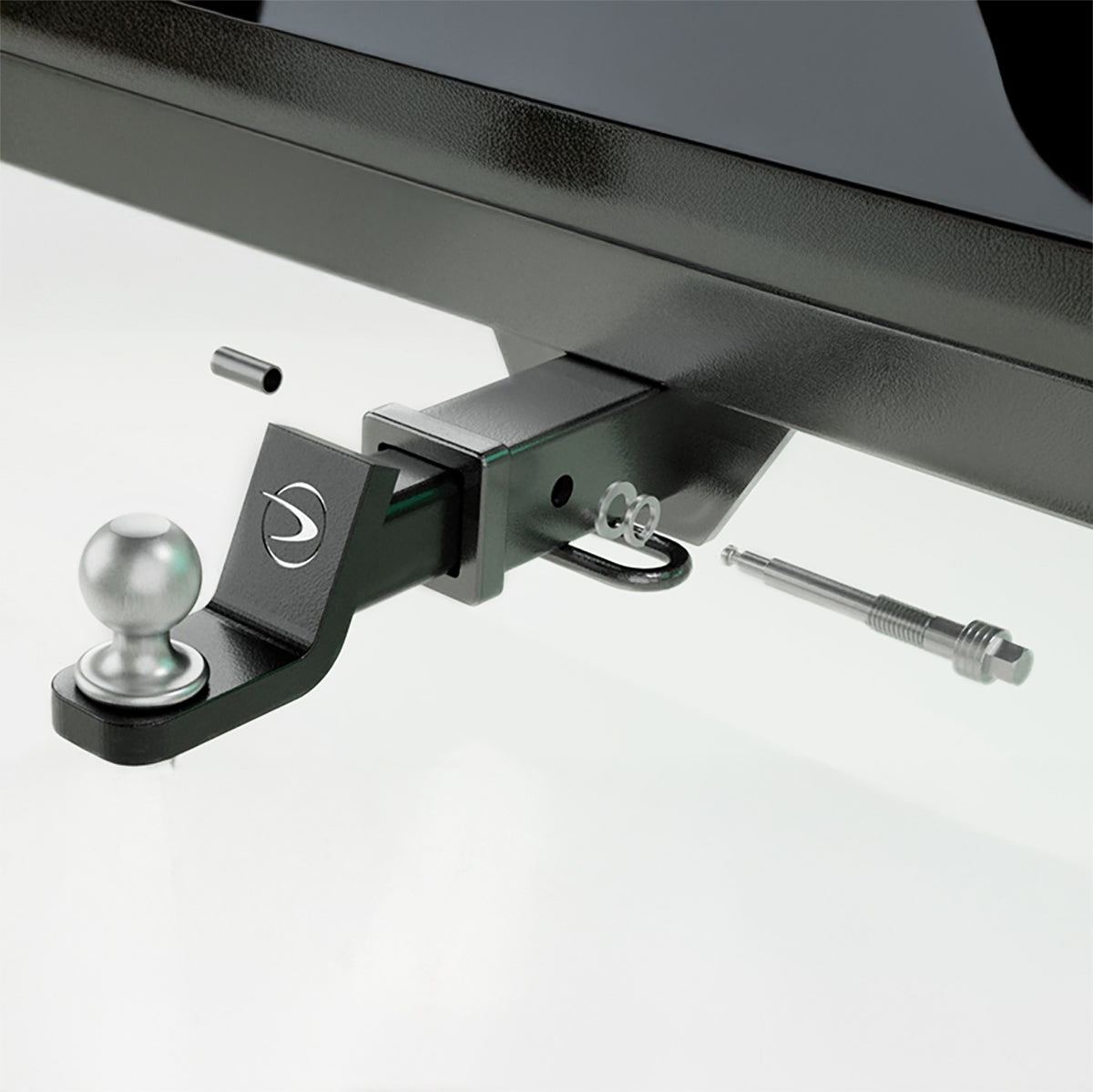
An RV bumper hitch is a type of receiver adapter that attaches to the square rear bumper of a camper or travel trailer to create a hitch-style receiver opening. Once installed, it gives RV owners a place to slide in accessories such as a bike rack, cargo tray, spare tire mount, or other hitch-mounted add-on.
Physically, most RV bumper hitches are clamp-on or bolt-on metal brackets that wrap around the rear bumper tube. From the outside, they can look similar to a standard receiver hitch because they create the same basic square opening used for hitch accessories.
While these product in themselves are fine, the issue is what they attach to.
On many RVs, the rear “bumper” is not a heavy structural beam. It is often a hollow steel tube designed for light-duty use, such as storing sewer hoses or supporting small accessories. While it may look like a strong part of the trailer, it is not always designed to carry the bouncing, twisting, and leverage created by bike racks, cargo carriers, or heavy loads.
That is why most RV bumper hitch products should be understood as adapters, not true structural hitch systems. Compared to a real hitch receiver which mounts to the RV frame and carries load forces through reinforced mounting points, a bumper adapter depends on the bumper itself to support the weight.

A bolt-on bumper hitch is another common term for an RV bumper hitch or bumper-mounted receiver adapter. The name can sound more secure because it bolts on, but that does not automatically mean it is a true structural hitch.
Just like a clamp-on adapter, a bolt-on receiver clamps or bolts around the RV’s rear bumper tube to create a receiver opening for accessories. The concern is not only how the adapter attaches. The bigger question is what the bolt-on receivers is attached to.
If the receiver bolts onto a light-duty bumper, the bumper is still the weak link. Many RV bumpers are hollow tubes designed for basic storage or light accessory use, not for carrying heavy bike racks, cargo carriers, or towing loads.
You may be thinking, what if it is welded on? A welded setup may sound stronger, but the attachment method alone does not determine safe load capacity. The bumper’s material, wall thickness, frame connection, manufacturer rating, and intended use all matter.

In most cases, using an RV bumper hitch for bike racks, e-bikes, or cargo carriers is not recommended.
Many RV bumper adapters are designed for light-duty use like spare tires, not for heavy racks, loaded cargo, or long-distance highway travel with weight hanging off the back. This matters because the rear of a travel trailer experiences amplified movement behind the axle. A load mounted back there does not sit still. It bounces, vibrates, pulls, and shifts as the trailer moves.
That movement is also why you are unlikely to find a bumper-mounted adapter with a high enough rating for a loaded bike rack. Even if the adapter creates a standard receiver opening, its rating does not change the strength of the bumper it is attached to.
Fit is only the first question. Strength, rating, travel conditions, and movement matter just as much.
If you are carrying bikes on a camper, travel trailer, or motorhome, it is important to understand RV-approved ratings before choosing a rack. Learn more in this guide to what makes a bike rack RV approved.

If it is not already clear, bolt-on RV bumper hitches are usually not recommended for bike racks, loaded cargo carriers, or other heavy accessories. The issue is not just whether the adapter fits. It is the possible scenarios that can happen when a light-duty bumper mount is treated like a true frame-mounted hitch.
Possible issues include:
A receiver hitch for a camper bumper may look like a simple way to add a standard hitch opening, but it does not create the same strength as a real hitch receiver. The adapter still depends on the bumper tube to carry the load. If that bumper is hollow, lightly attached, or not rated for the weight and movement, the setup can fail.

A trailer hitch or hitch receiver is a structural mounting system designed to carry load through reinforced attachment points. On an RV, camper, SUV, truck, or van, a true rear tow hitch receiver connects to the vehicle or trailer frame, not just to the exterior bumper tube.
That is the major difference between a hitch receiver and a bumper adapter. A bumper-mounted receiver depends on the bumper to support the load. A frame-mounted hitch receiver transfers that force into the stronger structure of the RV.
For heavier loads, a frame-mounted hitch receiver is usually the better choice. It gives you a stronger connection point for RV-approved bike racks, hitch cargo carriers, and other hitch-mounted accessories.
Whether you have a large class A RV or a smaller campervan, professional installation is strongly recommended, especially on travel trailers and campers. A qualified installer can evaluate the RV frame, confirm the correct hitch style, and install the receiver in a way that matches the vehicle’s structure.
Once you have a proper hitch receiver, you can choose accessories designed for that environment. Let’s Go Aero offers hitch-mounted bike racks, cargo carrier products, and hitch platform products built around stable transport, rear access, and RV-conscious carrying needs.
 |
Bonus Product Recommendation:Silent Hitch PinAfter upgrading to a proper frame-mounted hitch receiver, a Silent Hitch Pin can help secure the connection between your hitch and accessory. It reduces unwanted movement, rattle, and shake for a quieter, more stable carrying setup. |
Not every bumper use is wrong. Some RV bumpers can support limited accessories when the load is light, compact, properly mounted, and clearly within the manufacturer’s stated rating.
Possible light-duty uses may include:
Uses not recommended for a camper bumper hitch include:
As a general rule, RV bumper use should stay light, compact, and clearly within the manufacturer’s stated limits. If the load is heavy, valuable, extended, or used for long-distance travel, a frame-mounted hitch receiver is the safer option.
An RV bumper hitch may seem like an easy upgrade, but most RV bumpers are not built for heavy racks, loaded carriers, or towing setups.
The key takeaway: bumpers are not hitch systems. Before adding any rear-mounted accessory, check the RV bumper rating, hitch rating, accessory rating, and total loaded weight.
When in doubt, skip the bumper adapter and use a proper frame-mounted hitch receiver with RV-approved accessories. Explore Let’s Go Aero’s RV-rated bike racks, cargo carriers, and hitch accessories to find a safer setup built for life on the road.